Glass Stirring Rods

Glass Stirring Rods for Laboratory Applications

The glass stirring rod remains indispensable for applications requiring precise manual control—from titrations and sample preparation to temperature-sensitive reactions where automated mixing introduces unwanted variables. At At-Mar Glass, we manufacture stirring glass rods to exact specifications with the quality and quick turnarounds that keep your lab running without interruption.

Glass Stirring Products

Precision Glass Stirrers for Laboratory Mixing and Agitation

Laboratory work demands instruments that deliver consistent performance across varying conditions. Glass stir rods meet this requirement through superior material properties and precise manufacturing standards.

Chemical Inertness and Sample Integrity

Borosilicate glass construction ensures your stirring rods glass won’t leach ions or react with acids, bases, or organic solvents during mixing procedures. This inertness prevents contamination in pharmaceutical compounding, analytical sample preparation, and quality control testing where even trace impurities compromise results.

Quality glass stirring rods withstand rapid temperature changes from cryogenic conditions to elevated heating without structural failure. This thermal resilience proves essential during exothermic reactions, hot plate mixing, and ice bath preparations where maintaining constant agitation throughout temperature transitions ensures reaction completeness and reproducible outcomes.

Clear glass construction allows continuous observation of solution clarity, color changes, and precipitate formation during mixing. This transparency becomes critical during titrations where endpoint detection depends on subtle color shifts, and in crystallization procedures where monitoring supersaturation guides intervention timing for optimal results.

Material Composition and Manufacturing Standards for Glass Stirring Rods

The performance of laboratory glassware depends entirely on material quality and fabrication precision. At At-Mar Glass, we manufacture glass stir rods from premium borosilicate glass using established protocols that ensure dimensional accuracy and structural integrity.

Borosilicate Glass Type 3.3 Specifications

Our glass stirring rods utilize borosilicate Type 3.3 glass, meeting international standards for laboratory applications. This formulation provides low thermal expansion coefficients and high resistance to thermal shock, chemical attack, and mechanical stress. The consistent composition ensures predictable performance across temperature ranges and chemical environments encountered in pharmaceutical and research settings.

Proper annealing eliminates internal stresses that cause premature failure during use. Each stirring rod undergoes controlled cooling cycles that allow the glass structure to stabilize fully. This stress-relief process prevents spontaneous cracking during routine handling and extends service life, particularly important when rods experience repeated thermal cycling or mechanical agitation in demanding applications.

We maintain strict dimensional tolerances across diameter, length, and end configurations to ensure consistent performance. Every rod undergoes visual inspection for surface defects, inclusions, or irregularities that could compromise structural integrity or introduce contaminants. This quality control, handled entirely in-house at our facility, guarantees that each stirring rod meets professional laboratory standards before shipment.

Applications of Glass Stirring Rods in Chemistry

The chemistry glass stirring rod provides controlled manual intervention where precision and contamination prevention matter most.

Titration and Volumetric Analysis

Titrations demand gentle agitation that doesn’t introduce air bubbles or splash reagents from volumetric flasks. Stirring rod glass allows chemists to mix solutions thoroughly while maintaining visual clarity for accurate endpoint detection. The manual control prevents over-mixing that could affect indicator behavior or oxidize sensitive analytes during potentiometric and colorimetric determinations.

Organic Synthesis and Reaction Monitoring

During multi-step synthesis, stirring rods facilitate sample removal, transfer precipitates, and break up solid masses without scratching reaction vessel walls. This becomes essential when monitoring reaction progress via TLC or when adding reagents dropwise to exothermic reactions. The chemical inertness ensures no catalytic interference or unwanted side reactions from the stirring instrument itself.

Sample Preparation and Dissolution

Pharmaceutical testing and analytical protocols often require dissolving solid samples in specific solvents before instrumental analysis. Glass stirring rods accelerate dissolution through mechanical action while preventing cross-contamination between samples. The smooth surface allows complete sample recovery and easy cleaning between uses, critical for trace analysis and quality control applications requiring reproducible results.

Design Specifications and Selection Criteria for Glass Stir Rods

Selecting appropriate stirring rod dimensions ensures optimal mixing efficiency and prevents vessel damage. Understanding the relationship between rod specifications and intended applications guides informed purchasing decisions for laboratory operations.

Length and Diameter Considerations

Glass stir rods must extend beyond vessel depth while providing comfortable handling during extended mixing procedures. Standard diameters range from 4mm to 8mm, with thicker rods offering greater structural rigidity for viscous solutions and thinner profiles suited for narrow-neck flasks and test tubes. Match rod length to your most frequently used glassware sizes to prevent contamination from external contact.

Glass stir rod chemistry applications like titrations typically require 200-250mm lengths for burette clearance, while general mixing in beakers accommodates shorter 150mm rods. Pharmaceutical compounding often demands longer rods with rounded ends to prevent scratching during vigorous mixing, whereas analytical work prioritizes thinner profiles for precise manipulation in volumetric glassware.

Why Choose At-Mar Glass for Your Stirring Rod Needs?

Standard dimensions don’t always meet specialized research requirements. At-Mar Glass delivers the quality, customization, and service that keep your laboratory operations running smoothly.

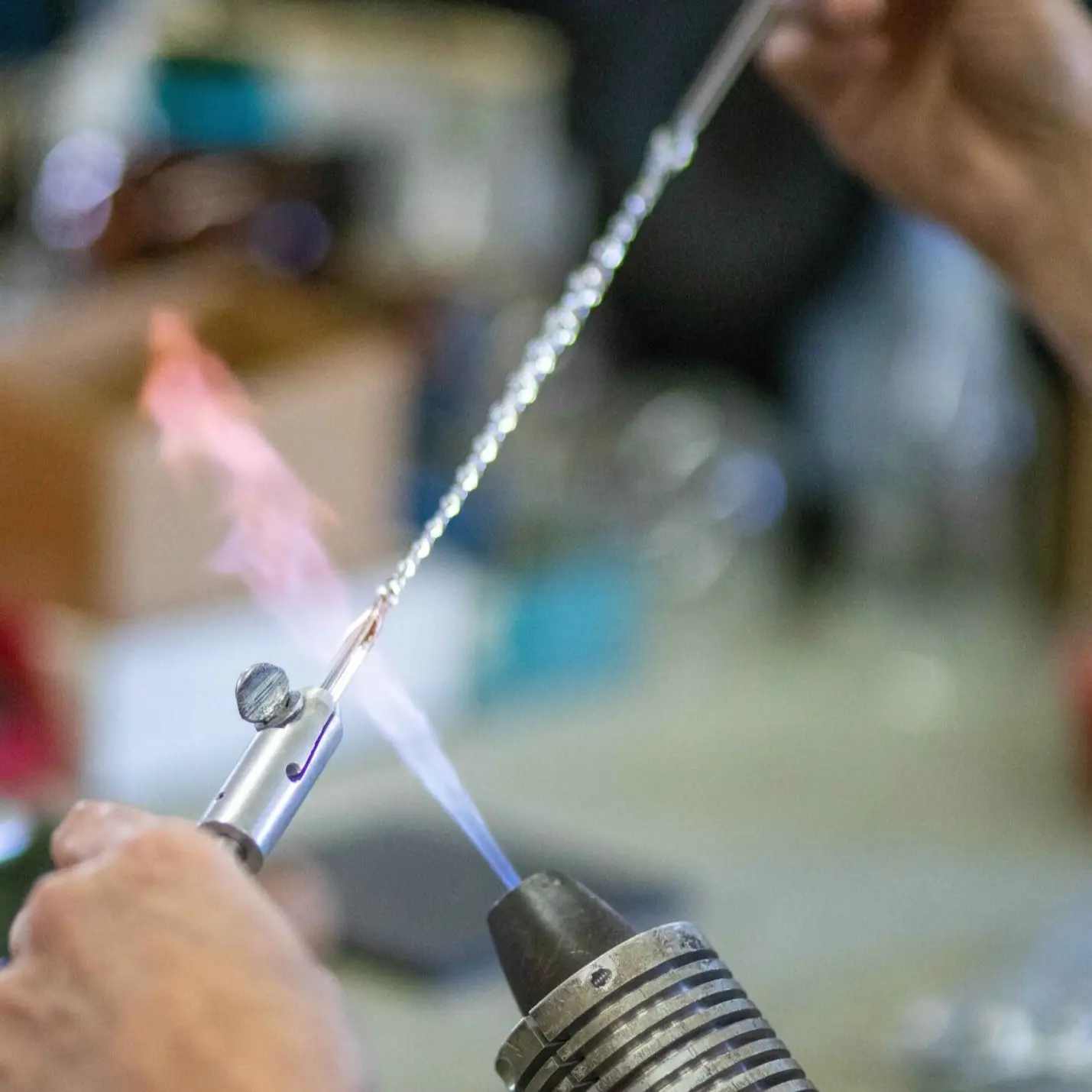
We handle all fabrication in-house with glassblowing specialists who bring decades of experience to every glass stir rod. Our integrated facility ensures consistent quality control and direct communication between you and the craftsmen creating your instruments, translating to faster turnarounds and instruments manufactured to your exact specifications.

We manufacture stirring rods in non-standard lengths, specialized diameters, and modified end shapes for particular mixing requirements. Whether you need rods with measurement markings, bent configurations, or matched sets for standardized procedures, our team accommodates technical specifications that standard catalog offerings cannot address.

Quality laboratory glassware shouldn’t break your budget or delay research timelines. At-Mar Glass provides reasonable pricing on both standard and custom fabrications, with turnaround times measured in days, not weeks. We treat each order—from bulk shipments to intricate modifications—with personal attention.

Glass Stirring Rods FAQs

Laboratory professionals often have questions about selecting and using glass stirring rods. Below are answers to common inquiries about materials, dimensions, applications, and care.

Laboratory glass stirring rods are manufactured from borosilicate Type 3.3 glass, which provides exceptional chemical resistance and thermal stability. This material withstands rapid temperature changes without cracking and won’t react with acids, bases, or organic solvents, ensuring your samples remain uncontaminated during mixing procedures.

Select a glass stir rod that extends at least 2 inches beyond your vessel’s rim for comfortable handling. Common lengths range from 150mm to 300mm. Match rod length to your most frequently used glassware—200mm works well for standard beakers, while 250-300mm suits taller flasks and graduated cylinders.

Quality borosilicate stirring rods glass tolerate temperatures from cryogenic conditions to approximately 500°C without structural failure. They handle thermal shock during transitions between ice baths and heated solutions. However, avoid direct flame contact and allow gradual cooling after high-temperature exposure to maximize rod longevity and prevent stress fractures.

Rinse glass stir rods immediately after use with appropriate solvents, then wash with laboratory detergent and distilled water. For stubborn residues, soak in chromic acid cleaning solution or use ultrasonic cleaning. Inspect for chips or cracks before each use, as damaged rods can contaminate samples or break during procedures.

Use glass stirring rod chemistry applications when you need precise control during titrations, when working with viscous solutions that magnetic bars can’t effectively mix, when vessels are too small for stirrers, or when avoiding metallic contamination is critical. Manual stirring also prevents overheating in temperature-sensitive reactions.

Upgrade Your Lab with At-Mar Glass

At-Mar Glass manufactures precision stirring rods for pharmaceutical, analytical, and research applications. Whether you need standard configurations or custom specifications, our in-house glassblowing team delivers exactly what your laboratory requires. Contact us today for fair pricing, rapid turnarounds, and expert craftsmanship.